Ordinary pain
How a thousand-year-old fresco in rural England reminds us that the past isn't even past

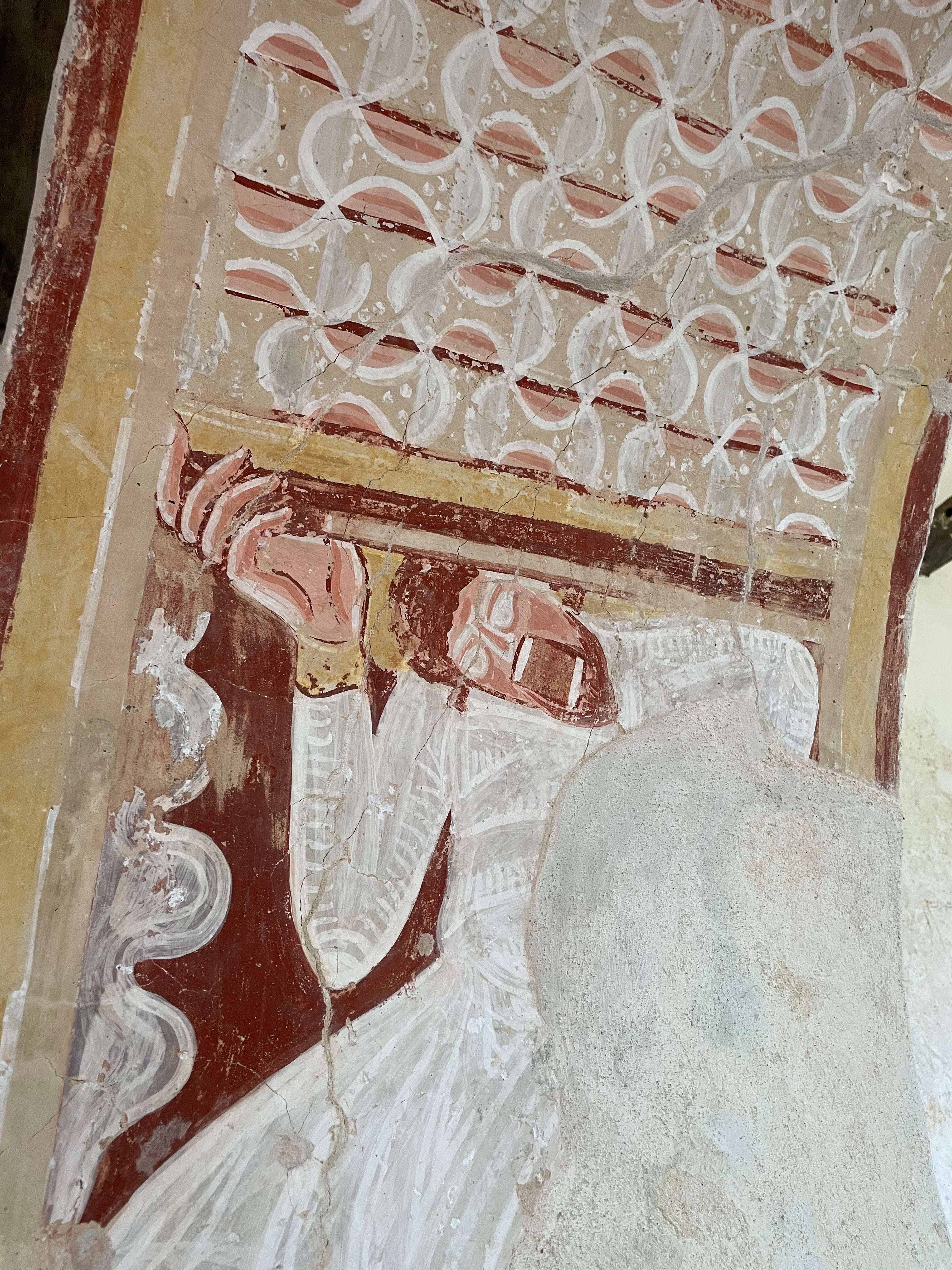
This is a thousand-year-old painting of a man in great pain. This pain is indicated simply, quickly. His open mouth is a brown rectangle. His teeth are thick white stripes laid on at either end. Dark lines around the bottom of his mouth show how wide his scream is: it pulls his whole face down. Aside from the mouth, not much else about the face is expressive. His eyes are blank spaces, like a mannequin’s. You think of other screams in the history of painting: Goya’s, Munch’s, Bacon’s. How the image of an open mouth can condense in one go a whole range of human emotions: horror, excitement, fear, shock, joy, ecstasy, anguish.
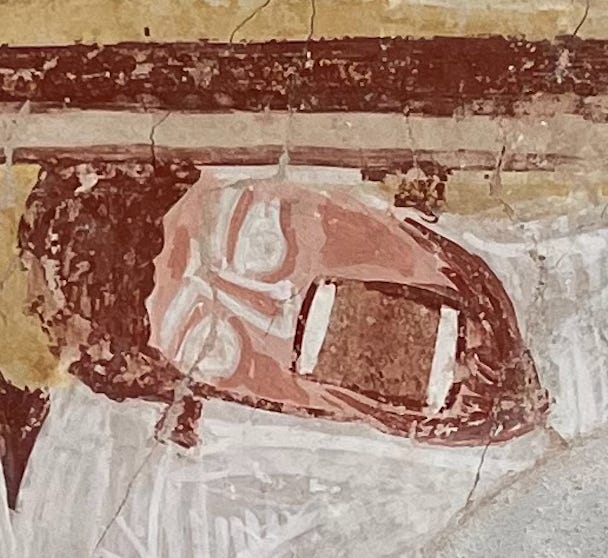
And the scream in this painting does what those other more famous screams do: it transforms everything else in the image into an echo of the scream itself. Cover the open mouth in this painting with a thumb and you can see how that works. (It works with those other artists too). Imagine the effect if it had been a smile instead, or a frown, a grin, or an O of surprise. It would transform how we read the hand, the arm, the rest of the man’s body, and the rest of the image. The scream sets the tone.
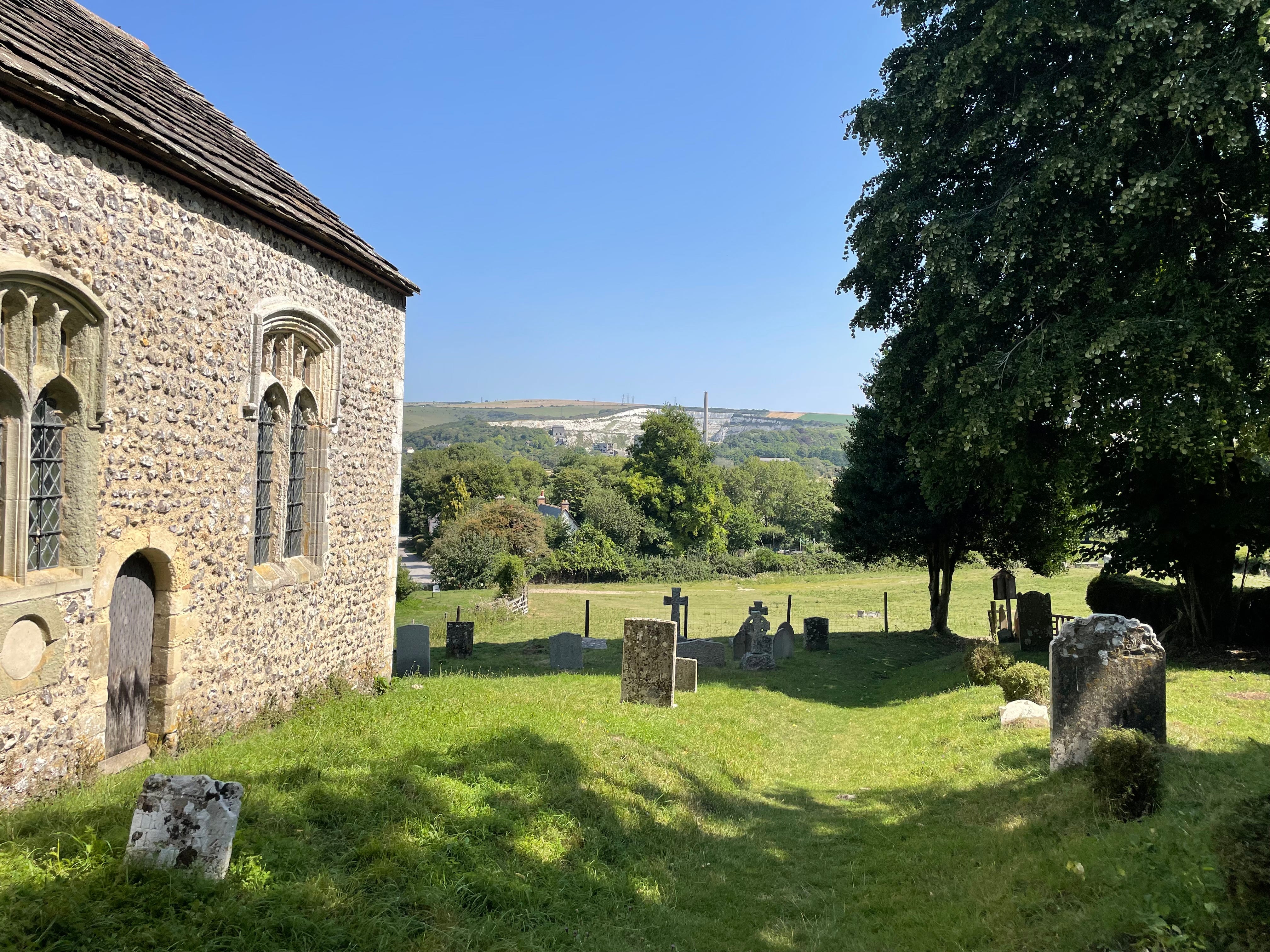
This painting is part of a series of eleventh century frescoes on the interior of Coombes church, in the Adur valley in West Sussex. The church is not easy to find; it isn’t always open. To access it you pass through a small farm, past barns and sheds, and walk though a field, dodging cowpats. The church itself is tiny. It’s hard to imagine more than thirty people fitting in here.