What can ancient objects teach us about artificial intelligence?
An ancient jade head, and the future of human knowledge

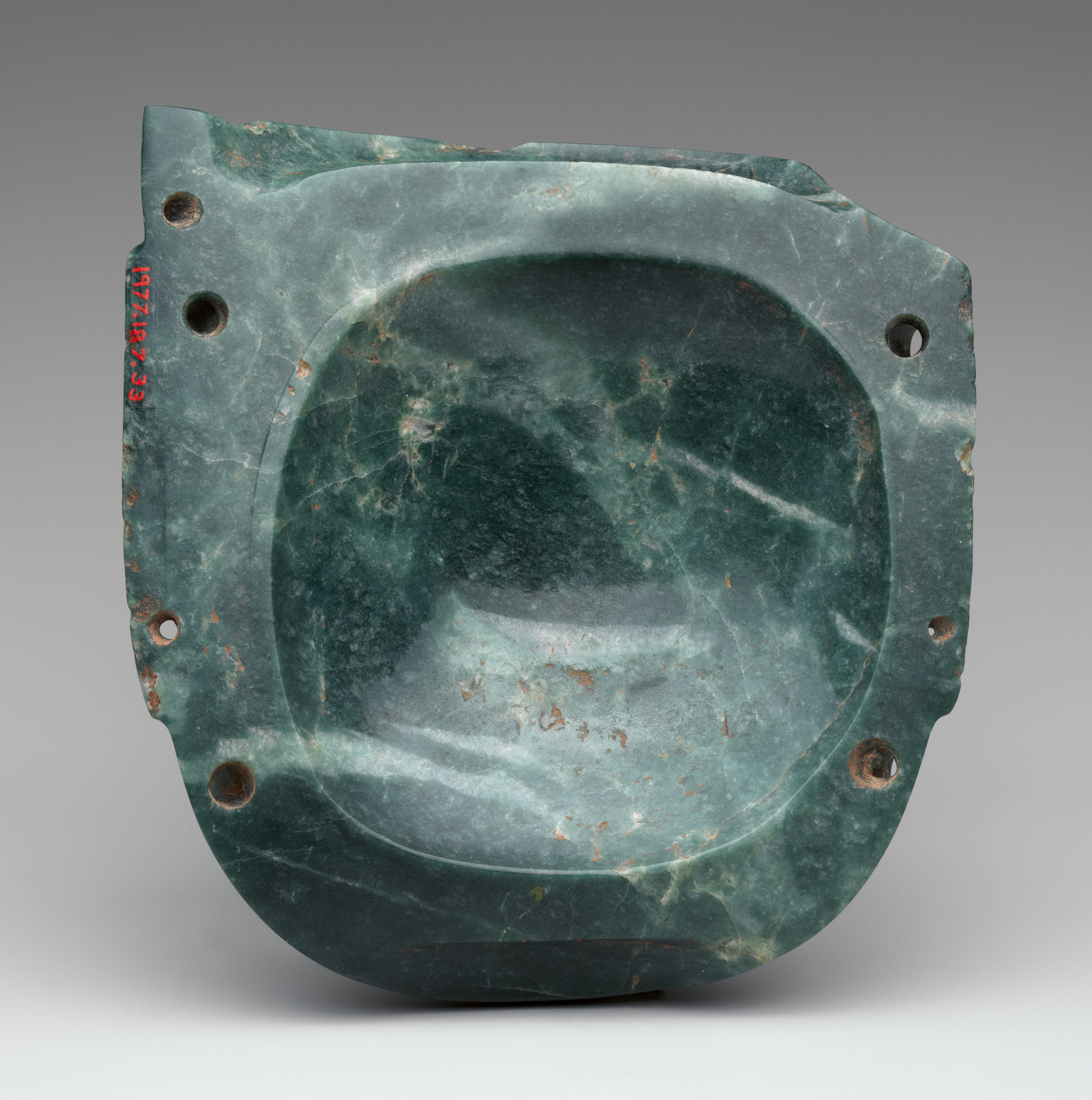
A stone was found one day in a riverbed in Mexico. Sometimes you get lucky. This stone, worked free of the river mud and pulled up through the water, was just what was needed.
A dark green stone, jade. As it dried in the sun its true colour emerged. Rich like the green of the river itself. Rippled like it too. It was as though the river itself had become solid.
A leap happened in someone’s mind. The jade object could be worked into something else. Tools – sharp stones, perhaps found at the edges of the same river – were put to work. Shaping it, smoothing it. Taking its cue from the natural shape of the object.
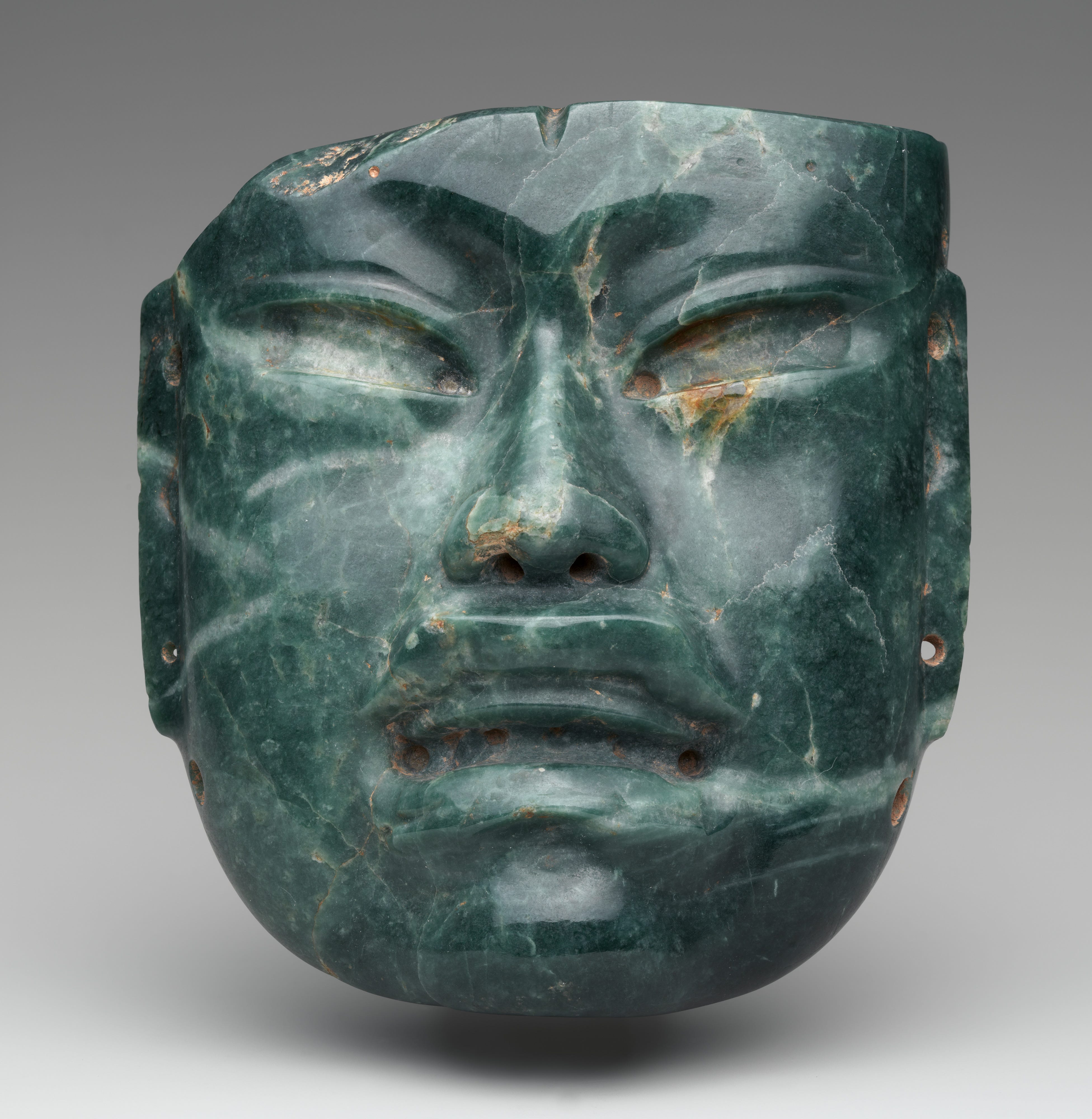
Already head-like, the stone became more so. Tools dug out eye sockets, nostrils, a mouth. After weeks of work, the stone was as smooth as human skin and contoured like a human face.
Like a human face, but not quite. This was the face of a god.
In the museum, the god’s jade head is installed among similar objects. This arrangement wants to tell a story about a geographical and historical context – in this case, Olmec Mexico. What’s missing from this way of telling is a context to which the head itself seems to point: the river and the people around it. The knowledge around it.
Context, from the Latin contexere. To weave together. Like water weaving around a stone.
The jade head is a repository of knowledge. It has had knowledge poured into it.
That first finder, dragging the stone upwards through river water, knew enough about the material that it would work well for a sculpture. (Other stones, you imagine, were rejected as too small, or too weirdly shaped, and plopped back into the water).
More knowledge accumulated around the found stone. Others knew where smaller stones might be found that were already sharp enough to carve it. Or might be sharpened sufficiently to do so. Still others knew what it would take to make of the stone a face. How labour could be parcelled out to make it happen.
And: how that head should look. What expression was the right one for it to wear. How a god should look. In other words, a critical practice.
Teju Cole writing about the cast brass sculptures of ancient Benin:
…the dark, burnished plaque summons up an entire world of West African experience, a world of artists, patrons, guilds, iconography, and critical practice. Yes, critical practice, because wherever it is that we encounter excellence in the visual arts, there is implied a critical apparatus for evaluating the success of those individual artworks in comparison to others from the same context.
Teju Cole, Tremor (2023)
Any work of art is an expression of knowledge. We can think of the so-called Olmec Face as a container of knowledge. It is a meeting place for different bodies of knowledge. It is an object that knows the world.
Why this object, why now?
This jade god’s head is for me a navigation aid in trying to understand another world, the world we live in now, in which ideas of intelligence are highly contested.
I’ve been using it (and other works of art) to think about forms of human intelligence that evade the limited definitions put forward by contemporary proponents of artificial intelligence.
It seems to me that the jade god’s head stands for a form of intelligence that happens in the body. That is connected, through the heightened sensory encounter with the world that art-making requires, to forms of non-human intelligence – the organic intelligence of animals, trees and rivers, and the spiritual intelligence of the supernatural.
James Bridle:
Technology, understood as our interface with the material world, is that human practice which most closely ties us to our context and our environment. …
…there are in fact many ways of doing intelligence, because intelligence is an active process, not just a mental capacity.
James Bridle, Ways of Being (2022)
The jade god’s head is an ancient form of technology that points the way towards a future that is expansive and generous in its definitions of intelligence. That is embodied, sensory, and alive.
This is intelligence as an active process in the same way the natural world is.
The stone is a meeting point for these intelligences. As we look, the object advances forward from its time to ours. And it recedes back, too - back to the time of its carving, back to the time of its discovery on the river bed, and further and further back beyond the limits of our knowing.